Medjool dates are widely recognized as a premium date variety and are commonly sold in high-value fresh, packaged and export markets. Because of their relatively high commercial value, consistent grading and appearance are particularly important for professional date processors and exporters.
However, manually sorting Medjool dates can be time-consuming and may result in inconsistent grading standards.
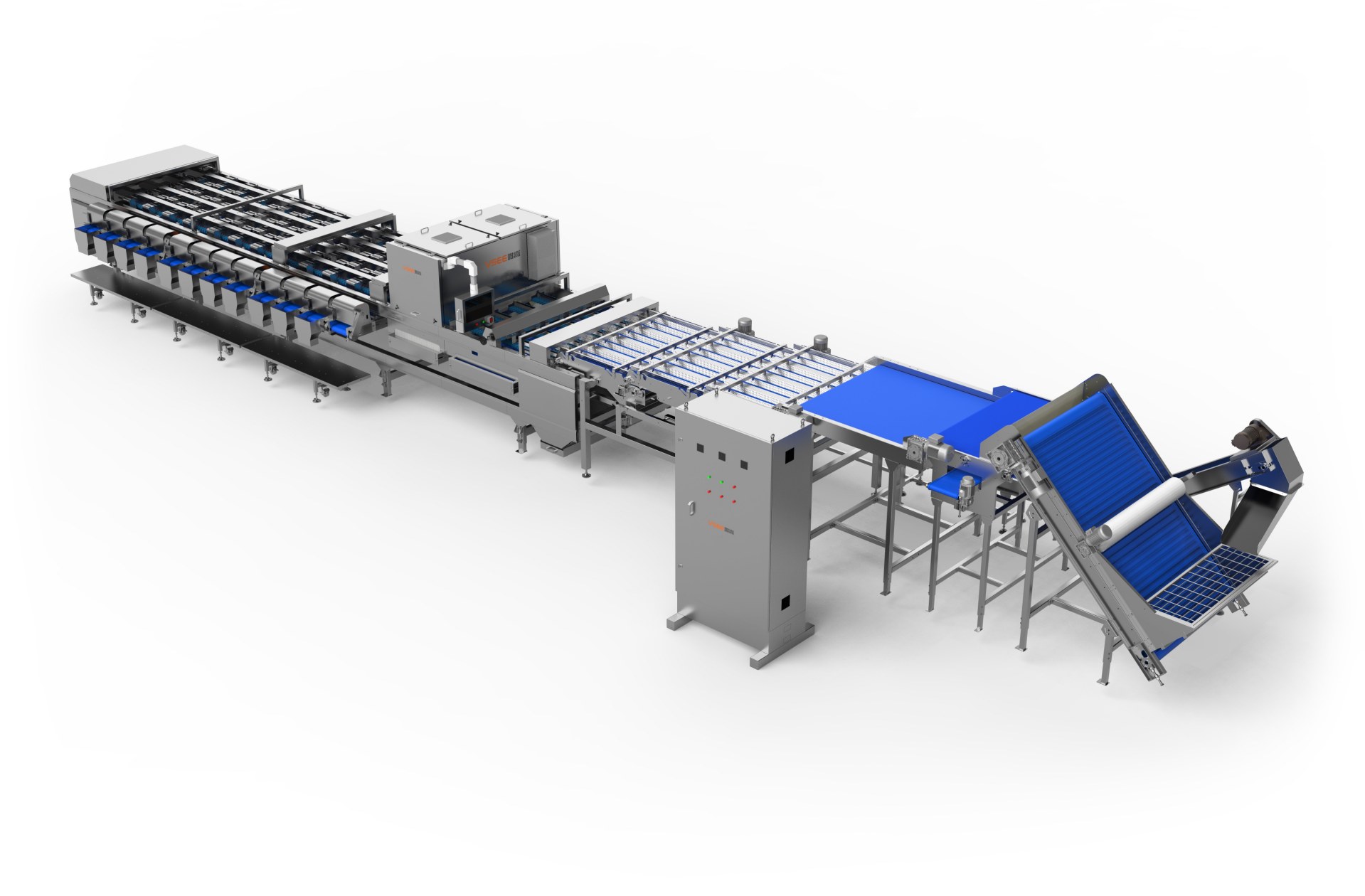
A modern Medjool Date Sorting Machine uses optical vision technology, intelligent algorithms and automatic rejection systems to inspect and grade dates according to predefined quality requirements.
Depending on the machine configuration, Medjool dates can be sorted according to size, color, shape and visible external defects.
This guide explains how automatic Medjool date sorting works, what defects can be detected, and how processors can select the right sorting solution.
1. What Is a Medjool Date Sorting Machine?
A Medjool date sorting machine is an automated optical sorting and grading system specifically designed to inspect and classify Medjool dates.
Unlike simple mechanical grading equipment, an optical sorting machine can analyze the visual characteristics of individual dates as they pass through the inspection area.
The machine can potentially evaluate:
Size
Length
Color
Shape
Surface appearance
Black spots
Visible mold
Insect damage
Cracks
Bruises
Deformation
Other visible defects
After inspection, qualified and defective dates can be automatically separated into different outlets.
For commercial processors, this helps create a more standardized grading process.
2. Why Is Medjool Date Sorting Important?
Medjool dates can vary significantly in size, shape, color and surface quality.
For premium markets, inconsistent appearance can affect the final grade and commercial value of the product.
Manual inspection has several limitations:
High labor requirements
Different workers may apply different grading standards
Small defects can be difficult to identify consistently
Long working hours can affect inspection efficiency
Increasing processing volumes require more labor
Automatic sorting provides a standardized inspection process and can operate continuously at industrial processing speeds.
The objective is not simply to replace manual workers. More importantly, automation helps processors establish consistent and repeatable grading standards.
3. What Can a Medjool Date Sorting Machine Sort?
The exact sorting capability depends on the machine configuration, product condition and customer's grading standards.
Size Sorting
Medjool dates can be separated into different size or length grades.
For example, a processor may require several commercial grades according to fruit size.
Automatic size grading can help reduce inconsistencies associated with manual classification.
Color Sorting
Color is an important visual characteristic of dates.
An optical sorting system can identify differences in fruit color and help separate dates according to predefined color ranges.
This can be useful when processors need to distinguish different maturity or appearance grades.
Shape Sorting
Medjool dates do not always have exactly the same shape.
Some fruits may show:
Deformation
Abnormal shape
Flattening
Irregular contours
A vision-based sorting system can analyze the shape and outline of individual fruits and separate products according to the required standards.
4. Medjool Date Defect Detection
Defect detection is one of the most important applications of automatic Medjool date sorting.
Depending on the optical configuration, visible defects may include:
Black Mold
Visible black mold or dark areas can reduce product quality and may require rejection.
Black Spots
Dark spots or abnormal surface areas can be identified according to predefined detection parameters.
Insect Damage
Visible damage caused by insects can affect the appearance and quality of dates.
Cracks
Cracked or split fruits can be separated from acceptable products.
Bruises
Mechanical damage and bruising can create visible abnormalities on the fruit surface.
Deformed Dates
Dates with abnormal shapes can be separated into lower grades or rejected.
5. Can a Machine Detect Black Mold on Medjool Dates?
Visible black mold can be detected when the defect creates a detectable difference in color or surface appearance.
However, not every quality problem is visible from a conventional external camera.
This distinction is important.
An optical sorting machine is primarily designed for visible external inspection. Internal quality, hidden defects and some moisture-related characteristics may require different detection technologies or additional inspection methods.
For Medjool dates, the tip/head area can also require special attention because some defects may be concentrated around difficult-to-inspect areas.
Therefore, camera position, lighting, image quality and product orientation are important when developing a Medjool sorting solution.
6. Medjool Date Sorting by Size, Weight and Shape
Different processors may use different grading standards.
Some customers may focus mainly on:
Size + Length
while others may require:
Size + Weight + Shape + Color + Defects
A suitable sorting machine should therefore be configured according to the customer's actual production requirements.
For example:
Grade A
Large + good color + good shape + no major visible defects
Grade B
Medium size + acceptable appearance + minor differences
Reject
Mold + severe black spots + insect damage + serious cracks + severely deformed fruit
The actual grading criteria should always be confirmed with the processor before equipment configuration.
7. Automatic Medjool Date Sorting vs Manual Sorting
For small farms or low-volume operations, manual sorting may remain practical.
For medium and large commercial processors, automatic sorting can help improve processing efficiency and grading consistency.
8. How Does an Automatic Medjool Date Sorting Machine Work?
A typical optical sorting process includes several stages:
Step 1 — Feeding
Dates enter the sorting machine through a controlled feeding system.
Step 2 — Product Separation
The dates are distributed so that individual fruits can be inspected by the cameras.
Step 3 — Optical Inspection
High-resolution cameras capture images of the dates.
The system analyzes characteristics such as:
Color + Shape + Size + Surface Defects
Step 4 — Intelligent Classification
The sorting software compares the detected characteristics with the customer's predefined grading standards.
Step 5 — Automatic Rejection
High-speed air ejectors remove defective or incorrectly classified dates.
Step 6 — Grade Collection
Different grades are collected through separate outlets for subsequent processing or packaging.
9. What Should You Consider When Buying a Medjool Date Sorting Machine?
Before purchasing equipment, processors should evaluate several factors.
1. Processing Capacity
Determine the required tons per hour or tons per day.
The machine should match the actual production volume rather than being significantly oversized.
2. Sorting Requirements
Clearly define what you need to separate:
Size
Color
Shape
Mold
Black spots
Insect damage
Cracks
Bruises
The more specific the requirements, the more important sample testing becomes.
3. Date Condition
Fresh, dry, soft and processed dates can behave differently during feeding and inspection.
The actual product condition should therefore be evaluated before selecting the machine.
4. Product Format
The sorting solution may also differ depending on whether the dates are:
Individual dates
On branch
Pitted
Unpitted
Processed
Packaged
5. Sample Testing
This is one of the most important steps.
Instead of selecting a machine based only on specifications, processors should provide actual Medjool date samples for testing.
The test should evaluate:
Detection accuracy + rejection accuracy + throughput + product damage + grading consistency
10. VSEE Medjool Date Sorting Solution
VSEE develops intelligent optical sorting and grading machines for agricultural products, including dates.
For Medjool applications, VSEE can develop a sorting configuration based on the customer's actual product and requirements.
The solution can focus on:
Size grading
Length grading
Color sorting
Shape classification
Black spot detection
Visible mold detection
Insect damage detection
Crack detection
Bruise detection
Deformed fruit rejection
The final configuration depends on the date characteristics, processing capacity and required grading standards.
Learn more about the VSEE Medjool Date Sorting Machine


 CN
CN español
 English
 français
 русский
 português
 ไทย
ไทย Indonesia
 Tiếng việt
 العربية
 فارسی
فارسی




 RED SOPORTADA